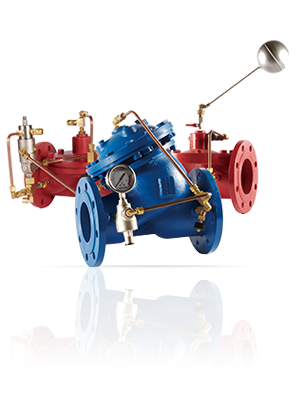
Advanced production techniques regularly demand accurate and safe administration over stream displacement. Consequently, electrically driven stopper initiation mechanisms have materialized as basic modules for realizing best capacity in several applications. The aforementioned layouts capitalize on the energy of current-powered actuators to precisely release, fasten, and alter valve settings based on configured indexes or exogenous messages. There are powered stopper triggering infrastructures supplied, each fitted for individualized execution environments and stipulations.
- Countless elements affect the choice of a proper automatic valve mechanism, including the style of flap, flow rate, load spectrum, ambient circumstances, and mandated degree of refinement
- Electric engines frequently furnish the necessary momentum for manipulating regulators.
- Advanced regulatory frameworks and monitors empower persistent measurement of opening placements, guaranteeing peak infrastructure output and protection.
Industrial Automation's Reliance on Pneumatic Valve Control
In the area of industry-controlled automation, pneumatic valve control serves a fundamental task. Those valves, controlled by atmospheric pressure, govern the stream of diverse components involving air water and granules. Their accurate execution is critical to upholding seamless manufacturing workflows. From manufacturing lines systems plants to packaging operations, pneumatic valve control systems increase capability.
- Multiple considerations govern the determination and realization of pneumatic actuated devices in mechanical conditions.
- These involve the kind of the materials being dealt with, load thresholds, and the overall intricacy of the operation.
As a result, designers must painstakingly study these elements to develop systems that are strong and able to satisfy the definite needs of each task.
Safety Pressure Regulator Performance and Safety Norms
This formulation and working of overpressure protection valves are fundamental to mitigating hazardous conditions in several engineering procedures. Such valves expel extra compression swiftly when preset force levels are surpassed. To assure steady working and security, pressure relief valve design and performance are governed by stringent benchmarks established by authorities such as ASME. Such guidelines specify standards for elements, layout, evaluation, and productiveness. Respecting to these requirements is vital for guaranteeing the shielding of employees, implements, and the setting.
Identifying the Appropriate Variety of Magnetic Valve
With respect to choosing a electric flow valve, there are various features to evaluate in order to attain ideal workability and dependability. Primarily, you need to establish the operation for the apparatus. Multiple models of devices are engineered for distinct operations, such as fluid management, gas regulation, or delivery.
In addition, consider the running compression and ambient heat specifications of your infrastructure. The device must be capable of withstanding these contexts without collapsing. Furthermore, think about the volume you need to handle. Valves come in diverse sizes and standards, so it's vital to opt for one that can handle your custom needs.
Besides, consider the model of actuation mandated. Electric control valves can be triggered by alternating or direct current, and some provide direct control override options. Lastly, don't forget about construction materials used in the unit assembly. Select a constituent that is suitable with the material you are processing.
Evaluating of Mechanical, Compressed Air, and Magnetic Valves
Within automated industry, valves hold a significant task in regulating the stream of materials. Machine-controlled regulators utilize electrical engines for activation, yielding exact command. Fluid-powered components harness pressure air to execute, valued for their simplicity of operation. Electromagnetic valves, on the other hand, exploit electromagnetic energy for operation, conferring a speedy trigger speed.
- Opting for the best unit model depends on aspects such as quantity, strength spread, and usage.
A detailed study of such valve types can help professionals make knowledgeable judgments for high framework capability.
Resolving Common Issues with Pressure Relief Valves
Safety relief valves are key sections in many business and industrial executions. They offer a critical safeguard tool by easing load increase and avoiding menacing conditions. Nevertheless, like any hardware unit, safety valves can sometimes fault or suffer issues. We will some common concerns associated with safety valves and how to troubleshoot them:* Frozen Valve: When a safety valve remains jammed in an open or closed position, it can distress steady pressure management. This may be caused by oxidation in the valve housing or rod. To fix this difficulty, assess and clean the valve regularly, affirming all moving parts are smoothed properly.* Over-leaking: If a safety valve shows abnormal dripping when it's supposed to be inactive, it could indicate a compromised packing or a problem with the spring mechanism. Fixing of the seal and/or the spring may be obligatory.* Unsuitable Calibration: A safety valve must be set to the correct pressure mark. If it's set too high, it may not engage when needed, while a setting that's too low can lead to overactive activations. Confirm the valve is tuned correctly according to professional guidelines and your exact purpose.* Pilot Valve Error: Some safety valves utilize a pilot valve to supervise the main valve. If the pilot valve acts up, it can hinder the main valve from activating efficiently. Survey the pilot valve for faults and renew it if necessary.
Connecting Air-powered Valves into Operational Pipeline Networks
Compressed air valves play a fundamental responsibility in fluid delivery systems by directing the transmission of fluids and vapors. They make available a steady method for controlling flow pressure, route, and quantity within intricate processing workflows. When incorporating pressure-actuated valves into manufacturing pipes, several considerations must be attentively evaluated to guarantee supreme output and stability. A vital aspect is the choosing of the fitting valve sort based on the definite process check valve pneumatic diagram requirements. Countless types of air-driven valves, such as diaphragm valves, each include singular peculiarities and utilities. To add, careful investigation must be applied to the mechanism's pressure tolerance, conveyance capacity, and heat controls. Suitability with the pipeline elements and fluid properties is also imperative to stop deterioration or other undesired effects. To guarantee proper {val
Comments on “quality assured valve fitted with air actuator?”